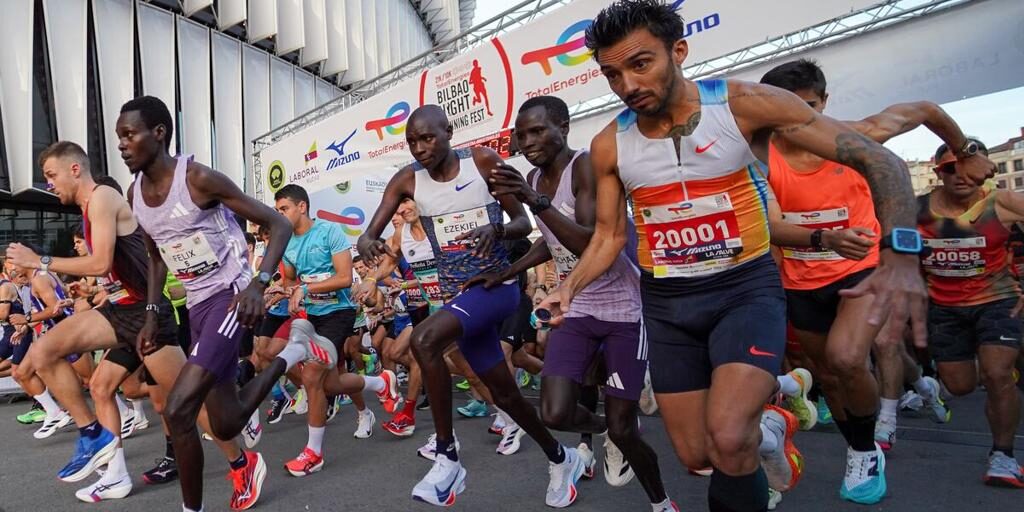
“Musobo won the men’s half marathon at Spain’s Bilbao Night Running Fest on 17 October, clocking 1:00:34 on his debut at the distance. His performance broke the previous course record and added another international road-running victory to Uganda’s distance-running achievements.”
Uganda’s Musobo announces himself on the international road-running stage
Ugandan long-distance runner Deogracius Musobo delivered a notable performance in Spain by winning the men’s half marathon at the Bilbao Night Running Fest on Saturday, 17 October 2026. Competing in his first race over the half-marathon distance, Musobo recorded a time of one hour and 34 seconds, establishing a new course record and placing Uganda firmly in the international road-running conversation.
The victory, reported by SoftPower News on 18 October, is significant because it combines a debut at a longer racing distance with an immediate course-record performance. Musobo finished ahead of Kenyan runner Evans Kipkorir, who clocked 1:00:45, and Ethiopia’s Alemayehu Mulate Teshager, who completed the race in 1:00:47.
His winning time improved on the previous course record of 1:00:37, set by Kenya’s Peter Mwaniki in 2023. That improvement of three seconds gives the Ugandan athlete a result that is meaningful beyond the podium: it establishes a new benchmark for the race and demonstrates his ability to compete with experienced distance runners.
A debut that delivered immediate results
Moving to a new race distance can be a demanding test for any athlete. Runners must understand how to distribute their energy, manage pace and respond to changing race conditions over a longer period. Musobo’s performance in Bilbao suggests that his preparation was effective, although a single result cannot by itself establish how consistently he will perform at this distance.
The half marathon covers 21.0975 kilometres, requiring a combination of endurance, speed, tactical judgement and mental discipline. Athletes who begin too aggressively risk losing ground late in the race, while those who conserve too much energy may struggle to catch their competitors.
Musobo’s 1:00:34 performance indicates a high level of competitiveness. His finishing time was also reported as a personal best. However, the most important next step will be to determine whether he can reproduce similar performances across different courses and against varied fields.
According to the report, Musobo entered the event with a 10-kilometre entry time of 27:59. That background provides context for his performance, demonstrating that he already possessed the speed required to compete at a high level before making his half-marathon debut.
Beating a competitive East African field
The podium in Bilbao reflected the strength of East African distance running. Musobo’s victory came ahead of two competitors from Kenya and Ethiopia, countries that have long produced world-class road runners.
The narrow gaps between the leading finishers underline the competitive nature of the event. Kipkorir finished 11 seconds behind Musobo, while Teshager was another two seconds back. Such margins make race strategy, positioning and the ability to respond during the closing stages particularly important.
For Uganda, the result reinforces the country’s presence in international road racing. Ugandan athletes have earned recognition in track events, cross-country running and major road races. Musobo’s achievement adds another positive result to that tradition.
Nevertheless, it would be premature to conclude from one race that he will immediately become a leading contender in every major half marathon. Long-term success depends on consistency, training quality, recovery, injury prevention and the strength of future competition.
What the result means for Ugandan athletics
Musobo’s win is an encouraging example of how Ugandan athletes can build opportunities outside the track. Road racing offers a competitive pathway for runners with strong endurance and speed, while also providing exposure to international events and professional competition.
Success abroad can inspire younger athletes who are developing in local clubs and training centres. Seeing a Ugandan athlete win in a European city demonstrates that runners from the country can compete successfully beyond domestic championships.
However, turning an individual victory into a sustainable career requires support. Athletes need access to qualified coaching, appropriate medical care, reliable travel arrangements, suitable competition schedules and sufficient time for recovery. Without those foundations, even talented runners can struggle to maintain progress.
Sports administrators and clubs can use performances such as Musobo’s to encourage young runners while maintaining realistic expectations. The objective should not simply be to celebrate a single result, but to create an environment in which athletes can continue to improve over several seasons.
Bilbao provides a valuable test
The Bilbao Night Running Fest included both a half marathon and a 10-kilometre race. Organisers expected approximately 27,000 participants across the two distances, making the event a substantial gathering for road-running enthusiasts.
A large event offers athletes an opportunity to compete in a structured environment with a competitive field and an established course. At the same time, course conditions, weather, pacing groups and the positioning of other runners can influence performance.
The available report does not provide a detailed account of Musobo’s race tactics or identify the exact point at which he established his decisive advantage. It is therefore better to focus on the confirmed outcome than to speculate about how the race unfolded.
The result also highlights the value of selecting races that suit an athlete’s strengths. Runners moving from shorter distances to the half marathon must balance their natural speed with endurance training. A carefully planned progression can help them extend their competitive range without sacrificing their existing abilities.
The wider picture for Uganda’s distance runners
Uganda’s athletics programme continues to produce competitors across track, cross-country and road-running disciplines. Athletes must now navigate a crowded international calendar, where the challenge is not only to achieve one outstanding performance but to remain competitive throughout the year.
Musobo’s win may create opportunities for future invitations and stronger competition, although any such opportunities remain dependent on organisers, athlete management and subsequent results. His immediate priority will be to recover properly and assess what the race reveals about his fitness and preparation.
The achievement could also encourage interest in road running among younger athletes. Coaches can use the result to discuss pacing, endurance development and the importance of entering races with realistic goals. Equally, the story can remind aspiring runners that international success is built through long-term preparation rather than one dramatic race.
What comes next?
The next measure of Musobo’s progress will be his performance in subsequent competitions. Repeating a strong time, competing successfully on a different course and maintaining fitness over a season would help demonstrate that the Bilbao result represents a sustainable level of performance.
For now, the course record is a clear achievement. Musobo won his debut half marathon in 1:00:34, defeated a competitive field and improved the previous course mark by three seconds.
The result gives Ugandan athletics a positive international story and another athlete to follow in the road-running discipline. It also illustrates the importance of developing opportunities for runners who can transition successfully between distances.
As Uganda continues to nurture its next generation of distance runners, Musobo’s performance offers a useful example of what disciplined preparation and competitive opportunity can produce. His victory in Bilbao is not a guarantee of future titles, but it is a strong starting point for the next stage of his career.
Editorial note: This report is based on the original article published on 18 October 2026. It is relevant to the 19 October news roundup, but it was not published on 19 October itself.