

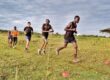
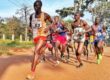
“Uganda’s 16th National Mountain Running Championships were expected to bring together more than 500 athletes from clubs around the country, with national titles and preparation for the 2027 World Mountain and Trail Running Championships at stake. The competition was designed to assess emerging and established runners on demanding terrain in Kapchorwa, while helping Uganda identify athletes capable of competing internationally.”
Kapchorwa Mountain Running Championships Highlight Uganda’s Ambitions for Global Athletics Success
Uganda’s mountain-running programme has entered an important phase as the country continues to develop athletes for domestic competition and future international championships. The 16th National Mountain Running Championships, scheduled for October 16–17 in Kapchorwa, were positioned as a major opportunity for runners to compete for national honours while demonstrating their readiness for the challenges of international mountain and trail running.
The competition was expected to attract more than 500 athletes from clubs across Uganda, according to Uganda Athletics’ announcement ahead of the event. Beyond the medals, the championships formed part of the country’s preparations for the 2027 World Mountain and Trail Running Championships, scheduled for October 6–10 in Cape Town, South Africa.
Although the championship weekend has passed, a confirmed final results report was not located in the sources reviewed for this article. Consequently, the significance of the event can be assessed from its published objectives, race structure and role in Uganda’s wider athletics development, without presenting unverified winners or timings as established facts.
Kapchorwa provides a demanding test for mountain runners
Kapchorwa is closely associated with Ugandan distance running and offers a challenging environment for athletes preparing for races that combine endurance, climbing ability and tactical judgement. Its highland landscape makes the area a natural setting for testing runners who want to compete in mountain and trail events.
Unlike conventional track races, mountain running requires athletes to manage changing gradients, uneven surfaces and the physical demands of sustained climbing. Competitors must judge their pace carefully because an aggressive opening can leave them struggling in the later stages. They must also maintain concentration when fatigue begins to affect their balance, stride and decision-making.
For coaches, such races provide an opportunity to assess more than finishing speed. The ability to distribute effort, respond to changes in terrain and maintain form under pressure can be as important as raw running ability.
The championships were therefore significant for both experienced competitors and younger athletes seeking to establish themselves in the sport. A strong performance could strengthen an athlete’s case for further consideration by coaches and selectors, although participation or victory alone should not be treated as confirmation of selection for a future international team.
National titles and future international ambitions
Uganda Athletics announced that the championships would serve as a national trial and a build-up event for runners seeking to represent the country at the 2027 World Mountain and Trail Running Championships.
The international competition in Cape Town gives the domestic programme a clear longer-term objective. Ugandan athletes will need to demonstrate that they can perform consistently, adapt to different racing conditions and prepare effectively for competition outside their home environment.
National events help coaches compare athletes competing under broadly similar conditions. They can also reveal promising runners who may not yet have extensive international experience but possess the endurance, resilience and technical ability required for mountain racing.
However, building a competitive international team requires more than identifying the fastest finishers at a single event. Selection decisions generally need to consider performance standards, consistency, fitness, preparation, eligibility and the applicable rules of the governing bodies.
The Kapchorwa championships therefore represented one part of a wider development process rather than a guarantee of places on the 2027 team.
Senior and junior athletes face different challenges
The published event announcement outlined senior uphill races over 14 kilometres for men and women, alongside junior under-20 contests over 6.5 kilometres and 8 kilometres. The event structure was designed to provide competitive opportunities for athletes at different stages of their careers.
Senior competitors face the challenge of combining experience with physical efficiency over a demanding course. They must understand how to regulate their effort, maintain momentum on climbs and use their remaining energy effectively near the finish.
Junior athletes, meanwhile, are developing the technical and physical foundations that can support longer careers. Competition at national level allows younger runners to experience pressure, learn race management and measure themselves against peers from other clubs.
This pathway is important because a country cannot rely indefinitely on a small number of established stars. Sustainable success depends on developing successive generations of athletes who can compete nationally before progressing to continental and global events.
Junior championships can also help coaches identify areas requiring improvement, including endurance, strength, recovery, nutrition, race tactics and mental preparation. Such assessments are most valuable when followed by structured training rather than isolated periods of intense competition.
Lessons from previous championship winners
Uganda Athletics’ announcement identified Martin Kiprotich Magengo of Police and Rispa Cherop of Prisons as the senior men’s and women’s 14-kilometre champions at the 2025 National Mountain and Trail Running Championships.
The previous junior winners included Enos Chebet of Arua and Nancy Chekwurui of UPDF. Their achievements provide a useful reference point for understanding the level of competition facing athletes entering the national championship programme.
Defending a title can be difficult because previous success raises expectations and encourages rivals to study an athlete’s strengths. Returning champions must demonstrate that they have maintained their fitness while adapting to changes in the field and the demands of the course.
For younger competitors, established champions offer a benchmark. Their performances can illustrate the importance of consistent training, tactical discipline and the ability to deliver under competitive pressure.
Nevertheless, previous results do not determine the outcome of a subsequent championship. Without an independently verified 2026 results report, it would be inappropriate to state that the defending champions retained their titles or that particular challengers won.
Uganda’s mountain-running tradition
Uganda has a history of producing internationally competitive distance runners, and mountain running provides another route through which the country can develop endurance talent.
The national federation has highlighted Uganda’s international mountain-running record, including Geoffrey Kusuro’s junior men’s gold medal at the 2007 World Mountain Running Championships in Ovronnaz, Switzerland. That achievement established an early milestone for the country in the discipline.
Since then, Uganda has continued to cultivate athletes in cross-country, road racing, track distance events and mountain running. These disciplines share important physical foundations, but each demands particular technical skills and race strategies.
Mountain running can be especially valuable for athletes who demonstrate strong climbing ability and the capacity to maintain effort over uneven terrain. At the same time, success requires specific preparation; strong performances on the track or road do not automatically translate into equivalent results on mountain courses.
A sustained national programme can help runners acquire these skills through appropriate coaching, regular competition and exposure to different types of terrain.
The importance of coaching and athlete support
Talent identification is only the beginning of a successful athletics pathway. Athletes require access to qualified coaches, structured training plans, medical support, suitable nutrition and adequate recovery.
Mountain runners must balance demanding sessions with rest to reduce the risk of overtraining and injury. Uphill training can improve strength and cardiovascular conditioning, but its intensity must be matched to an athlete’s experience and physical condition.
Coaches also need to monitor how athletes respond to training loads. Younger competitors, in particular, benefit from gradual progression and age-appropriate programmes that prioritise long-term development over immediate results.
Financial support matters as well. Travel to competitions, accommodation, equipment, meals and medical services can create significant costs for athletes and their clubs. Athletes who lack reliable support may find it harder to attend qualifying events or sustain consistent preparation.
Federations, clubs, local authorities and sponsors can contribute by supporting competitions, improving access to training facilities and helping promising runners progress through the national system.
Why the 2027 world championships matter
The World Mountain and Trail Running Championships scheduled for Cape Town in October 2027 provide a longer-term target for Ugandan runners and coaches.
Preparation for an international championship normally involves identifying eligible athletes, evaluating performance, planning training cycles and arranging appropriate competition opportunities. Athletes must also prepare for the particular terrain and conditions they are likely to encounter.
The Kapchorwa event offered a domestic environment in which runners could demonstrate their ability and gain competitive experience. However, preparation for a world championship will require additional assessment and training beyond one national race.
International competition can expose athletes to different pacing strategies, stronger fields and unfamiliar racing conditions. Such experience can contribute to their development, provided it is supported by adequate recovery and a well-designed training programme.
For Uganda, the longer-term objective is not simply to send a team abroad, but to ensure that athletes arrive sufficiently prepared to compete confidently and safely against international opponents.
Building a sustainable future for Ugandan athletics
The significance of the national mountain-running championships extends beyond individual medals. A well-organised national competition can strengthen club participation, encourage young athletes and provide coaches with useful information about the country’s talent pool.
It can also raise the profile of mountain running among spectators, schools and potential sponsors. Greater public awareness may encourage participation and support for events that help identify and develop athletes outside the traditional track and road-racing environment.
To sustain that progress, competition organisers need reliable scheduling, clear rules, safe routes and transparent communication of results. Timely publication of finishing times, category standings and selection procedures helps athletes, coaches, journalists and supporters understand what the event achieved.
Equally important is ensuring that promising performances lead to meaningful development opportunities. Athletes need guidance on training, access to subsequent races and clear information about the requirements for representing Uganda internationally.
Conclusion
Uganda’s 16th National Mountain Running Championships were planned as a key domestic competition, bringing together athletes from across the country and supporting preparations for the 2027 World Mountain and Trail Running Championships in Cape Town.
The event’s importance lies in its combination of national competition, talent identification and longer-term athlete development. Kapchorwa’s demanding terrain provides a useful test of endurance and climbing ability, while the inclusion of junior categories creates opportunities for emerging runners to gain experience.
The next stage is to establish the verified 2026 results and determine how the performances will inform Uganda’s subsequent preparations. Until an official results report is available, claims about individual winners, finishing times or selection decisions should remain unconfirmed.
Uganda’s international ambitions will ultimately depend on consistent competition, quality coaching, appropriate athlete support and careful preparation. The Kapchorwa championships form part of that wider effort to turn the country’s deep distance-running talent into sustained success across mountain and trail athletics.




Hi, this is a comment.
To get started with moderating, editing, and deleting comments, please visit the Comments screen in the dashboard.
Commenter avatars come from Gravatar.